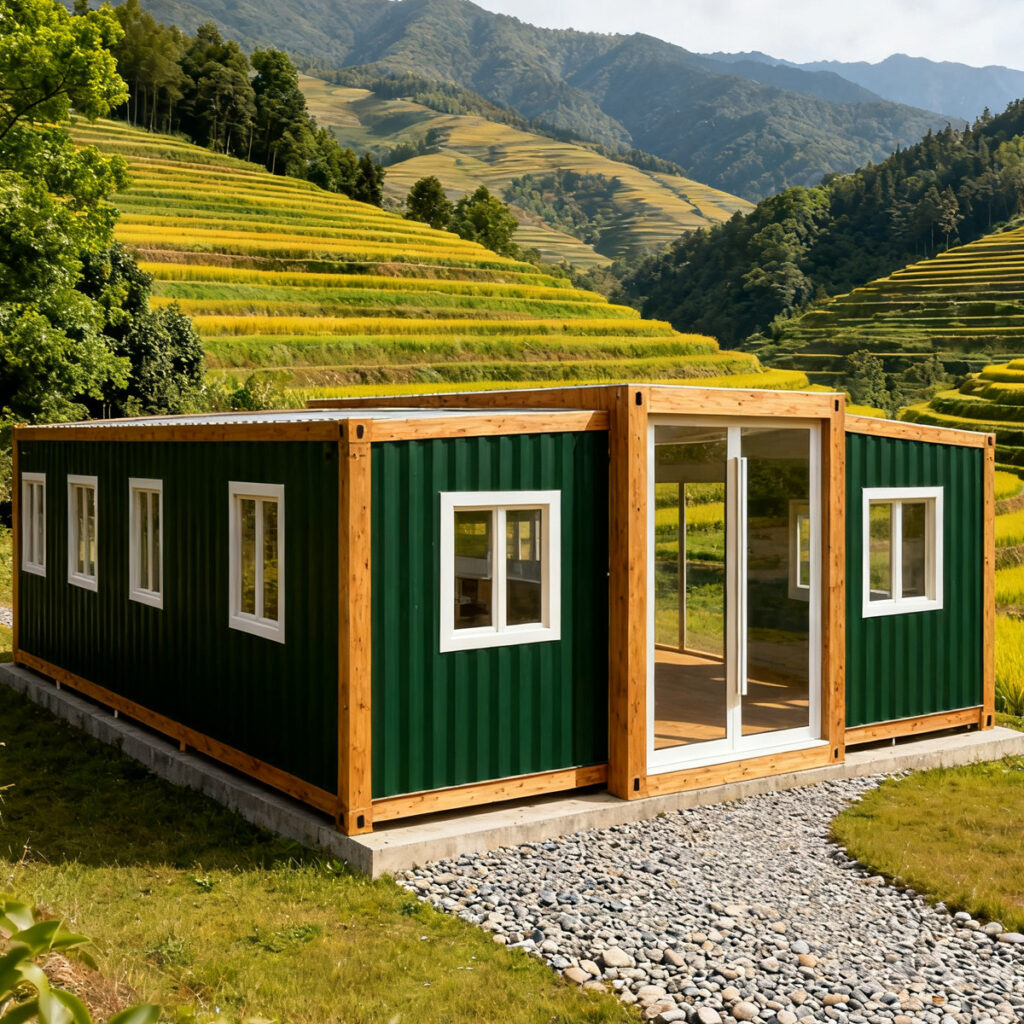
What are the future trends for viral shipping container structures?
The “container-style trendy housing” (often referring to container homes, modular container hotels, or container commercial spaces) is expected to continue growing in the future, but it will shift from being purely “Instagram-worthy” to becoming more standardized, commercialized, and high-end.
Here are the main trends:
First, it will move from “photo-driven popularity” to “stable operation.” In the early stage, container projects mainly relied on appearance to attract traffic. In the future, customers will care more about long-term usability, such as insulation, noise reduction, waterproofing, and the stability of electrical and utility systems.
Second, modular customization will become more advanced. Instead of simple stacked containers, they will be designed like “Lego blocks” that can be freely combined into hotels, cafés, offices, exhibition spaces, or even small commercial districts with strong scalability.
Third, environmental and low-carbon trends will continue to drive growth. Container reuse aligns with green building concepts and will increasingly be promoted in regions like Europe, the Middle East, and Southeast Asia as a sustainable construction solution.
Fourth, cost advantage will remain important, but with greater focus on efficiency and precision. Future competition will not be about being the cheapest, but about delivering the best cost-performance ratio through higher factory prefabrication and faster on-site installation.
Fifth, smart technology will become standard. Future container buildings will commonly integrate smart door locks, intelligent climate control, lighting systems, and even solar power solutions to increase added value.
Sixth, application scenarios will continue to expand beyond tourism and hospitality into:
Temporary commercial showrooms
Urban renewal projects
Construction site offices and dormitories
Integrated cultural and tourism complexes
In short:
This industry is evolving from a “trendy Instagram product” into a “modular building solution industry.”